What is EDM Machining
Electrical discharge machining (EDM), also known as spark machining, spark eroding, die sinking, wire burning or wire erosion, is a metal fabrication process whereby a desired shape is obtained by using electrical discharges (sparks).Material is removed from the work piece by a series of rapidly recurring current discharges between two electrodes, separated by a dielectric liquid and subject to an electric voltage. One of the electrodes is called the tool-electrode, or simply the tool or electrode, while the other is called the workpiece-electrode, or work piece. The process depends upon the tool and work piece not making physical contact. Extremely hard materials like carbides, ceramics, titanium alloys and heat treated tool steels that are very difficult to machine using conventional machining can be precisely machined by EDM.
Precision
When you need highly accurate machining, EDM manufacturing is your best option. It is capable of making cuts that match your designs within ± 0.0001”.
Intricacy
Wire EDM is an excellent option for manufacturing delicate and complex parts. With Wire EDM, it is possible to manufacture the same intricate part over and over again with the same accuracy.
Shorter lead times
Because the EDM process is so accurate, it makes it possible to get it right the first time, significantly shortening the time it takes to get a product from the prototype phase to the marketplace.
Less set up time
EDM manufacturing reduces the need for tooling, which in turn lessens the amount of time that it takes to set up.
Tapers
EDM machining is useful for cutting long tapers that other machining methods cannot produce.
Accurate internal cuts
Square-edged internal cuts are difficult to produce with other machining methods, but Wire EDM makes it possible.
Although the principles of EDM machining are the same, there are variations in the process, especially between wired EDM working and sinker EDM working. Both processes have anodes and cathodes used to shape the workpiece to fit the parameters of the produced part. How they complete this process using electrical current is quite different.
With sinker EDM machining, an electrical potential difference is created between the tool and work material, both of which are electrically conductive and submerged in a dielectric fluid such as hydrocarbon oil or deionized water. The spark gap that separates the tool and workpiece is flooded with the dielectric fluid. The created electric field depends on the electric potential difference and the spark gap.
The tool takes the negative terminal while the work material takes the positive terminal of the power generator. Free electrons on the tool are subjected to electrostatic forces the moment the electric field begins. If there is less work function or smaller bonding energy of the electrons, the emission of electrons would be from the tool (assuming that it is connected to the negative terminal). This type of emission of electrons is called cold emission.
Through the dielectric medium, the cold emitted electrons are accelerated towards the work material. As they gain velocity and energy and begin moving towards the work, collisions occur between the electrons and dielectric molecules. The collisions cause the ionization of the dielectric molecules, which depends on the work function or ionization energy of the dielectric molecule and the energy of the electrons. As the electrons accelerate, positive ions and electrons are generated because of the collisions.
This cyclic process increases the electron and ion concentration in the dielectric fluid between the tool and the work material at the site of the spark gap. The concentration becomes so high that the matter in the channel is characterized as “plasma.” The electric resistance of the plasma channel is very low. The large number of electrons flux from the tool to the work with ions moving suddenly from the work to the tool. This motion of electrons is known as an avalanche.
The sudden movement of electrons and ions creates the thermal energy of the spark with a heat range of 8,000°C up to 12,000°C. The rapid motion of the electrons hits the work material and the ions on the tool. The impact of the electrons and ions on the surface of the workpiece is converted into thermal energy or heat flux.
The EDM wire machining process, an alternative to sinker EDM machining, works much like a wood band saw using a wire for the cutting process. The wire, made of copper or brass, has a high voltage electrical discharge passed through it that makes it possible for the wire to cut through the thickness of the workpiece.
The wire in EDM wire machining creates a spark in deionized water where conductivity is precision controlled. The water cools the material and washes away the removed material with clean dielectric fluid being constantly pumped into the process to flush the excess waste away.
The extreme temperatures of the EDM process rapidly removes excess material from the workpiece by vaporization and melting or spark erosion. The molten metal is partially removed. As the electric potential is withdrawn, the plasma channel is no longer sustained and generates pressure or shock waves as it collapses. This evacuates the molten material forming a crater of material that is removed from around the spark site.
Die sinking EDM
Die sink EDM (also known as Ram EDM, conventional EDM, or cavity-type EDM) is the best Electro Discharge Machining for creating parts with complex cavities. It is also the method chosen for solving the sharp internal corner issue when CNC machining. This method utilises graphite or copper electrodes, a dielectric fluid, and an electric spark induced between the electrode and the workpiece.
Wire EDM
Wire EDM, otherwise known as wire erosion, is commonly used to produce extrusion dies. It cuts using the same mechanism as die-sinking. However, the die is replaced with a very fine electrically charged wire which will work as the electrode. This machining method is comparable to a cheese cutter, making a two-dimensional cut in a three-dimensional part.
Hole drilling EDM
As the name implies, Hole drilling EDM (or small hole drilling EDM) is used to machine holes. However, this technique can accurately machine extremely small and deep holes that don't require deburring compared to traditional hole drilling methods.
Many manufacturers choose to use EDM machining in drilling extremely tiny holes because it lessens the risk of having deflected and damaged tools. EDM machined holes can be very small in structure and can be seen on the edges of turbine blades, microscopic orifices for fuel system components, and many more.
EDM machining is often used as a complementary process in addition to conventional machining in the fabrication of molds and dies. As mentioned above, the wire cut type is typically used for forming blanks for the molds, the sinker type may be used to form complex shapes of the cavities, and the hole drilling may be used for creating pressure release holes.
The EDM machine is also used to remove stuck metals within a work part that can’t be removed in any ordinary way. Disintegrating the stuck components means destructing or removing the material. Some circumstances include sheared bolts on threaded holes, suck toolings on a machined part, or a pin stuck on a very precious part. By disintegrating the components, you get to remove the stuck metal without causing damage to the part to be reclaimed.
EDM machined products do not form burrs when being manufactured, that is why these are perfect for creating various medical implant components.
There are a lot of features on an aerospace part that cannot be made by some standard cutting tools, and that is where the EDM machining comes in. EDM machining is capable of producing challenging features with foremost, turbine rotor disc, thin slots, sharply squared holes, and very tight deep hole requirements.
Workpiece
Every machining process requires a workpiece. In short, it is the piece of material that is undergoing forming, sometimes known as a blank. In EDM, there are few requirements for the workpiece. It must simply be a material with electrical conductivity properties. Another important thing to note—and a major advantage to using EDM—is that the process is not influenced by the machinability of a metal. In other words, while conventional machining processes can more easily process certain metals, the nature of EDM means it can just as easily machine the hardest of metals.The workpiece must be held securely in place by a jig or fixture.
01
Tool electrode
The tool electrode, or electrode, is the tool used to create a spark when it comes into near contact with the workpiece. Common tool electrode materials are graphite, copper, tungsten, brass, and their alloys. The type of electrode also varies depending on the EDM technique used. For example, in wire EDM, the electrode is a copper or brass wire, while fast hole EDM uses a tubular electrode. The tool electrode is controlled by a servo motor, which precisely moves the tool according to CNC pathways and ensures that it does not touch the workpiece throughout the EDM process. In other words, it maintains a controlled spark gap between the electrode and the workpiece.
02
Dielectric liquid
It is imperative that the EDM process be conducted in a tank of dielectric fluid, such as deionized water or a non-conductive lubricating oil. Without the liquid, the molten particles removed from the workpiece could be pulled towards the tool electrode and weld themselves to it, which would disrupt the process and ruin the tool. The vat of dielectric fluid (which is kept in continuous motion) helps to not only cool the particles as they are removed from the workpiece but to move them away from the electrode. The fluid also functions to control the electrical discharge occurring between the electrode and the workpiece.
03
The power supply
The power supply controls the release of the electrical charges during the EDM process, tuning the frequency and strength of the electrical current based on the properties of the job at hand. These series of charges go through the electrode to react with the workpiece. This reaction generates sparks at the precise spot where the electric field is strongest (i.e. where the workpiece and electrode are closest). At a given moment, thousands of sparks can be eroding the workpiece. EDM is notable as a machining process that consumes a lot of energy.
04
The conductivity of your deionized water, known as dielectric, is very critical in the EDM process. Each of the generator settings used in the EDM process requires rapid electrical discharges from the wire to the part being cut. The “gap” between the wire and part is maintained by a controlled spark that erodes a small section of the workpiece causing it to melt and then resolidify in a small sphere that is flushed away. This process is repeated thousands of times in a second.
When the conductivity of the dielectric is too high or low, this will cause the gap to be inconsistent; which will affect precision and, in some cases, cause wire breakage. By checking your dielectric probe and keeping it clean, you can keep your machine's conductivity control system working properly. This should be done every 500 hours and be double-checked with a separate conductivity meter.
You ran your self-diagnosis and your generator is running at peak performance, but you are still not getting the speed and cut quality that you had when new! Other than your contacts it most likely can be your power cables. Not only do they supply the energy for cutting but also return information back to the generator to better control the cutting conditions. If you have a submerged cutting system, the dielectric can cause a breakdown in the integrity of the cables even sooner. Unlike a power board failure that instantly shuts your system down, power cables will lose performance gradually over time—and many are amazed at the improvement of the machines cutting process after replacement.
Your generator cabinet is one of the most expensive components on your EDM center. There are many boards with many smaller electrical elements and circuits; and they all depend on a cool and clean flow of air for optimum performance and longevity. All generator cabinets have openings, usually in the door, that holds a small filter that collects dirt and other small particles.
All shops are different—with some having a temperature control room for their EDM and others in a cell or production configuration on the shop floor. You may need to replace them monthly or yearly but, they must be replaced with new ones. Also, be sure to check the air flow direction on the filters because some have a two-part system for catching larger debris then smaller debris.
Cooling fans provide air circulation in your generator cabinet that keeps boards and other components from overheating and experienced stressed conditions that will eventually lead to failure. For example, solder joints can become brittle from too much heat, then cool off when shut down, creating micro-cracks that ultimately reduce the performance of the board and its components. By checking these fans daily on startup, you will measurably extend the life of the CNC and power supply of your EDM system.
Last but not least is a job that is not very much fun but needs to be done at least once a year. All EDM systems have a clean tank and a dirty tank. The dirty tank collects most of the contamination before it is sent to the filtration system and then on to the clean tank. It is very important to keep the clean tank as clean as possible since this is the source of dielectric that is delivered to the cutting process and other components like your threading jet. Many small pieces of debris will, in time, find their way to the clean tank from dirty filters and/or the filter change-out procedure.
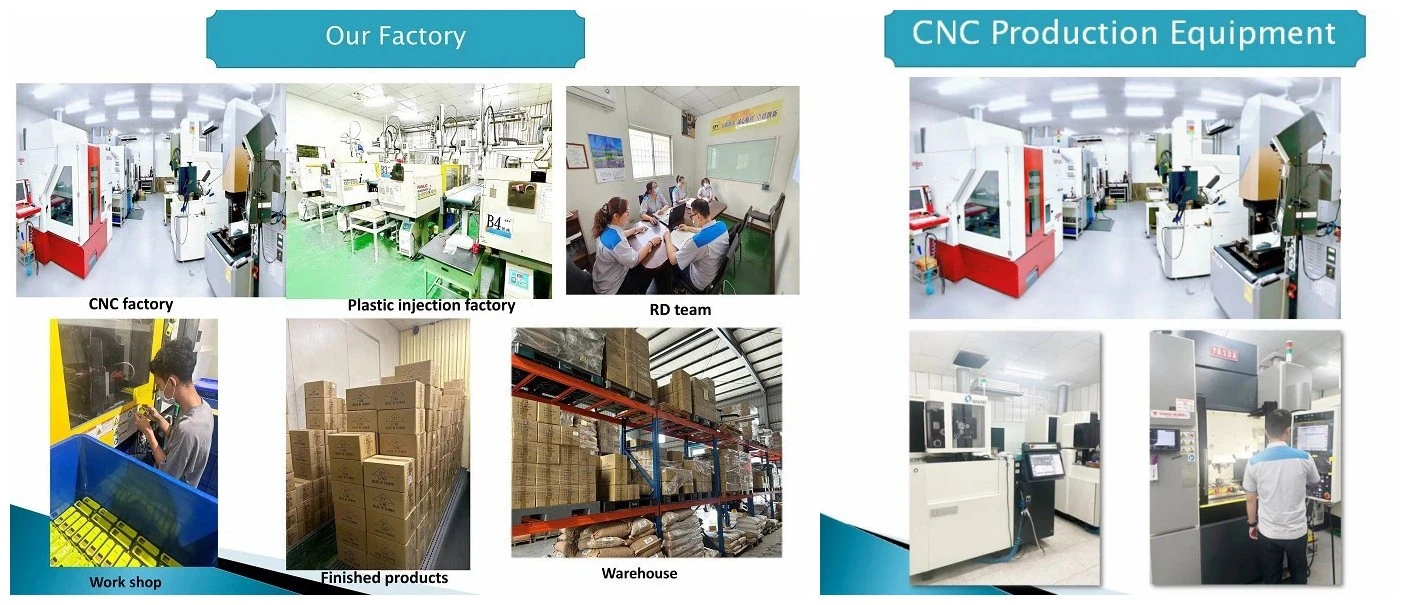
CFY specialize in plastic injection, CNC turning, CNC milling, CNC grinding and have successfully collaborated with companies in these field. We have over 14 years' experience on this field. We specialize in producing various types of components, which are widely applicable to aviation, hand tools, electronics, electrical appliances, automotive, machinery, construction materials, optics, electronic gadgets, cosmetics, and household items.
Q: What is EDM machine used for?
Q: Is EDM a CNC machine?
Q: What is the difference between EDM and machining?
Q: What materials can be machined by EDM?
Q: Does EDM use AC or DC?
Q: What is the basic principle of EDM?
Q: What liquid is used in EDM machine?
Q: What is the minimum thickness for EDM?
Q: What are the 3 types of EDM?
Q: How small of a hole can EDM cut?
Q: What is the temperature of EDM cutting?
Q: Why dielectric is used in EDM?
Q: Where is EDM mostly used?
Q: How does an EDM machine cut?
Q: What can you make with an EDM machine?
Q: What is the best material for EDM electrodes?
Q: What is the advantage of using EDM?
Q: What is flushing in EDM process?
Q: Can EDM cut blind holes?
Q: How deep can EDM cut?
As one of the leading edm machining manufacturers and suppliers, we warmly welcome you to buy discount edm machining for sale here from our factory. All customized products are with high quality and competitive price. For pricelist and free sample, contact us now.
Tpu Injection, 5 Axis CNC Wood Machining Services, EDM Metal Cutting(0/10)