CNC turning is a manufacturing process in which bars of material are held in a chuck and rotated while a tool is fed to the piece to remove material to create the desired shape. A turret (shown center), with tooling attached is programmed to move to the bar of raw material and remove material to create the programmed result. This is also called “subtraction machining” since it involves material removal. If the center has both tuning and milling capabilities, such as the one above, the rotation can be stopped to allow for milling out of other shapes.

Accuracy
The CNC turning machine can execute exact measurements and eliminate human mistakes using CAD or CAM files. Experts can deliver incredibly high accuracy using cutting-edge machinery, whether for the production of prototypes or the completion of the entire production cycle. Every cut is precise since the machine being used is programmed. In other words, the final piece in the production run is identical to the first piece.
Flexibility
Turning centers come in various sizes to accommodate your applications’ flexibility. The adjustment is rather easy because this machine’s tasks are preprogrammed. The operator can finish your component by making the necessary programming adjustments to your CAM program or even build something entirely different. Therefore, you can rely on the same precision CNC machining services company if you need many unique parts.
Safety
Manufacturing firms adhere to strict safety rules and regulations to guarantee complete safety. Since the turning machine is automatic, less labor is required because the operator is only there to monitor the machine. Likewise, the lathe body employs fully enclosed or semi-enclosed protective devices to avoid flying particles from the processed item and lessen harm to the crew.
Faster Results
There is a lower chance of error when tasks specified by programming are carried out on CNC lathes or turning centers. As a result, this machine can finish production more quickly without sacrificing the final output quality. Finally, you can receive the necessary components faster than with other options.
Threading is a lathe machining or turning operation that incorporates a mechanical tool that cuts threads on the outer surface of a workpiece. The tool does this motion by moving along the side of the workpiece. Threads—the result of the operation—are helical grooves with pitches and lengths that have been specified. To get deeper threads, the tool needs to pass multiple times along the side of the workpiece. The tool used to perform this action is a thread-shaped cutting tool bit. To get the job done accordingly, the machine must be properly set. In the event that multiple passes of the tool are needed to cut deeper threads, the machine must be set so that the helix begins at the same location.
Turning is the most common among the many machining operations. During this process, excess material is removed from the outer diameter of a workpiece or cylindrical surface. This material removal is done until the desired diameter is achieved. Two turning operations that an operator must become familiar with are: rough and finish operations. In the rough turning operation, the operator is less concerned about the accuracy and surface finish of the workpiece. The emphasis rather, is on the time taken to get the job done. On the other hand, the finish turning operation not only gets the job done but also focuses on accuracy and a good surface finish.
Tapping is a machining operation that employs a tapping tool to create threads as it enters axially through an existing hole of a workpiece. The bit size which is accommodated by the tapping tool is determined by the size of the hole. The instrument used to perform the operation is called a tap, and it is a multipoint cutting tool. The workpiece is placed on a faceplate and made to rotate at a slow speed. While a special fixture is used to support the tap as it is placed on a tailstock spindle.
The purpose of knurling is to create serrated or diamond-shaped patterns on the surface of a workpiece or part. Knurling helps to facilitate the easy gripping of the machined part and also makes it aesthetically pleasing. The tool used to perform this operation is called a knurl. To achieve these patterns, the knurl (or knurls) are brought into contact with the workpiece surface and the (tool) teeth are made to roll against it.
The purpose of knurling is to create serrated or diamond-shaped patterns on the surface of a workpiece or part. Knurling helps to facilitate the easy gripping of the machined part and also makes it aesthetically pleasing. The tool used to perform this operation is called a knurl. To achieve these patterns, the knurl (or knurls) are brought into contact with the workpiece surface and the (tool) teeth are made to roll against it.
The reaming operation is used for the enlargement of a hole in the workpiece. Essentially, reaming is a sizing operation. The reamer or reaming tool penetrates axially through the workpiece and enlarges an existing hole to the diameter of the reamer. The reamer comes after the drilling operation has been concluded. It removes only a small amount of material and produces a rounder hole with a smoother internal finish compared to the drill. The reamer is held in place on a tailstock spindle while the workpiece rotates at a very slow speed.
The reaming operation is used for the enlargement of a hole in the workpiece. Essentially, reaming is a sizing operation. The reamer or reaming tool penetrates axially through the workpiece and enlarges an existing hole to the diameter of the reamer. The reamer comes after the drilling operation has been concluded. It removes only a small amount of material and produces a rounder hole with a smoother internal finish compared to the drill. The reamer is held in place on a tailstock spindle while the workpiece rotates at a very slow speed.
Application of CNC Turning
Aerospace: Aviation industry is one of the most common CNC turning applications, the aircraft body, engine, and other parts can't travel safely without the machined parts. For example, 4/5 axis capabilities of Dajin Precision are able to achieve harder materials processing for aerospace and other industry.
Automobile: No matter it is a civilian car or a military automobile, CNC machining applications provides CNC Turning Lathe Services parts and components of a variety of sizes and specifications, offers fast solutions to meet the huge demands of the automotive industry and other vehicles.
Electronics: Electronics is an important industry related to the national economy and people's livelihood, countless precision parts of some electronic device have to work with high consistency and reliability each time, such as the computers. The complex hardware of electronic products has rows of metal slats, panels, etc., all of which reflect the details of CNC machining services.
Mechanical: All machine parts used in the mechanical industry need to meet certain technical specifications to ensure they serve for manufacturing normally. Custom CNC Mechanical Parts can make your machinery or equipment more competitive in the market, our main mechanical components include Fastener, Motor shaft, Empty metal cans, Conductive pins, Connector joint, Shaft sleeve, Pneumatic fitting, Hydraulic fitting, Hose joint pipe coupler, Screws (Rivet, Bolt, Nut), Eccentric (hollow) shaft, etc.
Medical: Medical and Dental Instrument need CNC machining process to shape the parts exactly. CNC machining puts the right point, angle end and other details on the application of the instruments, the main product features medical tooling and medical mold components, testing machine parts, packaging, processing machinery replacement and spare parts, R&D fixtures, analysis instrument parts.
Military: CNC machining application in military and defence industry has existed for a long time. The precision and uniformity produced by CNC machining center suits many aspects of the military’s nature, core Dajin CNC Military Parts include Airframe Parts, Screws, Spacers, Consumables, Expendables, Avionics / Instruments, Engine Components, Rotables, etc.
Materials Used in CNC Turning

01.Aluminum
02.Brass
03.Bronze
04.Cast iron
05.Copper
06.Hastelloy
How CNC Turning Works
With CNC lathes, the geometry of machined components is formed by removing the material. During turning, the workpiece rotates about a hypothetical axis, which is held in the lathe chuck. This axis is the Z axis and holds the major motion which is the rotary motion. The cutting tool has the secondary motion that is the feed.
When the cutting tool comes in contact with the workpiece surface, the material is removed; this is how cutting is done with lathes. In more detail, the cutting tool is on one side of the workpiece diameter on X-axis and the machined surface is produced diametrically, around the Z axis. The cutting tool can move either longitudinally or transversely (i.e. in a straight line parallel to the workpiece’s Z-axis, or transverse to the axis of the piece) or even as a combination of longitudinal and transversal motions.
The workpiece can take several geometries. Which geometry the workpiece will take depends on the combination between the two axes (rotation and feed) as well as the cutting tools to be used. In turn, the cutting tools to be used depend on both the kind of the desired surface to be produced as well as the type of turning operation (for instance, either internal or external).
CFY specialize in plastic injection, CNC turning, CNC milling, CNC grinding and have successfully collaborated with companies in these field. We have over 14 years' experience on this field. We specialize in producing various types of components, which are widely applicable to aviation, hand tools, electronics, electrical appliances, automotive, machinery, construction materials, optics, electronic gadgets, cosmetics, and household items.
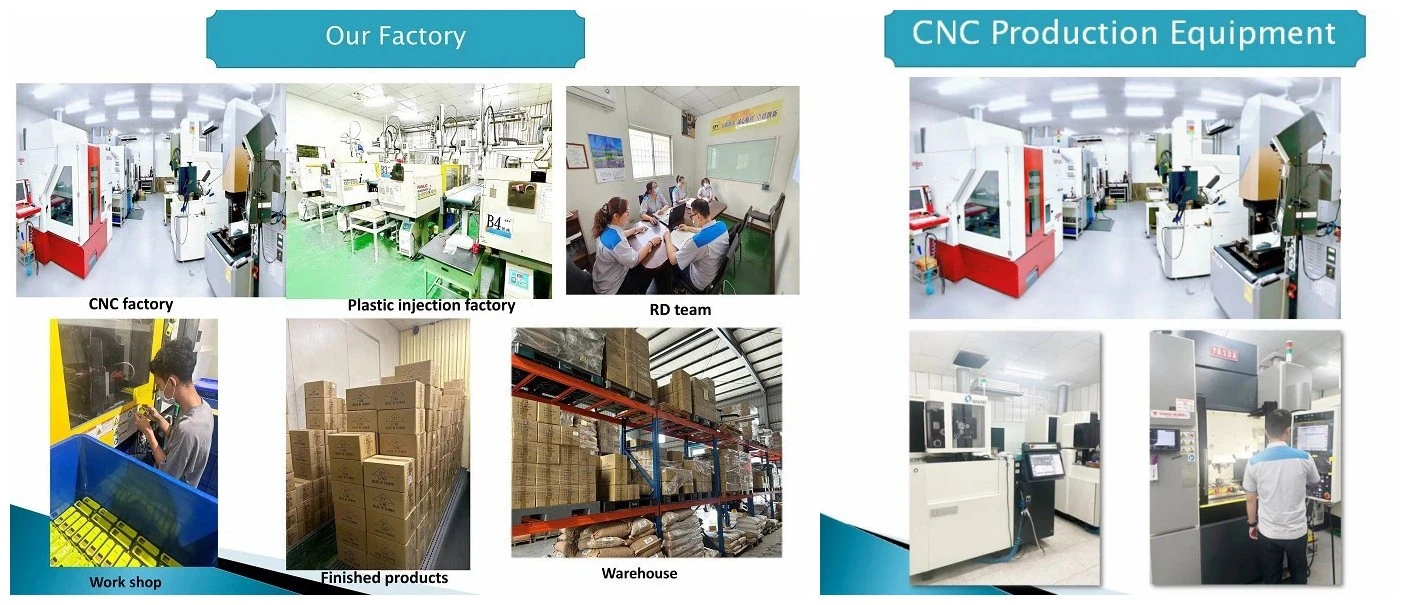
As one of the leading cnc turning manufacturers and suppliers, we warmly welcome you to buy discount cnc turning for sale here from our factory. All customized products are with high quality and competitive price. For pricelist and free sample, contact us now.
plastic injection molding inserts, CNC Grinding Services, Brass Turned Parts(0/10)